
News
A high-tech factory specializing in flow meters
The company's instrument science and technology park covers an area of 100,000 square meters

The company's instrument science and technology park covers an area of 100,000 square meters
ISM6HG265 | ST | Next-generation high-end intelligent IMU | The most distinctive feature: dual independent accelerometers (Low-G + High-G parallel and simultaneous sampling) + gyroscope, built-in MLC machine learning kernel + FSM finite state machine
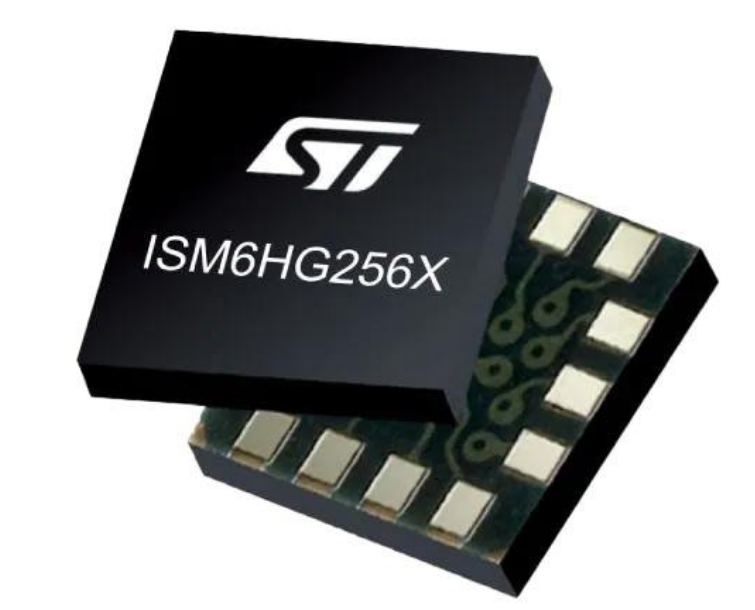
Industrial equipment, logistics assets, and protective helmets require both long-term monitoring of subtle vibrations and the capture of instantaneous collision events.ISM6HG256X integrates both Low-G and High-G acceleration sensor sets into a single LGA-14 package. It shifts the responsibility for state determination and AI recognition to the sensor end, thereby reducing the pressure on the main controller and achieving the goal of detecting “no event is missed.”
Full model: ISM6HG 256X (order code ISM6HG-256XTR)
Manufacturer: STMicroelectronics (iNEMO series from STMicroelectronics)
Package: LGA-14L, size 2.5 × 3.0 × 0.83 mm, bottom pad, no side pins; ECOPACK2 eco-friendly packaging, RoHS compliant
Screen printing: the top surface of the chip has a simplified screen printing with a small round indentation marking pin 1; The complete model number will not be printed on the chip surface.
Power supply: VDD 1.71-3.6V; IO power 1.08-3.6V, supports low voltage master interface
Operating temperature: -40°C ~ +105°C, industrial grade wide temperature, ST long-term supply plan (10 years supply guarantee)
Communication interface: I2C, SPI, MIPI I3C version 1.1; It also has auxiliary SPI/I3C and supports OIS/EIS stabilization channel output.
Core hardware architecture: 3-axis low-G accelerometer + 3-axis high-G accelerometer +3-axis gyroscope, three sets of MEMS parallel independent sampling
Built-in intelligent engine: MLC machine learning kernel, FSM finite state machine, ASC adaptive self-configuration, SFLP low-power sensor fusion; 4.5KB ultra-large FIFO cache
WHO_AM_I: Software identifies chip ID, drives development of critical registers
Core performance parameters (can be copied directly as a table)
form
Parameter item Typical indicator
Low-G acceleration range ±2/±4/±8/±16 g programmable
Low‑G noise 60 µg/√ Hz
High-G acceleration measurement range ±32/±64/±128/±256 g programmable
High-G noise 1 mg/√Hz
Gyroscope range ±250/±500/±1000/±2000/±4000dps programmable
Gyro noise 3.4 mdps/∘Hz
6-axis high-performance mode current 0.67 mA (Low-G + gyro only)
Double accelerometer full open + gyroscope 0.80 mA
FIFO cache 4.5KB
Intelligent functions: MLC machine learning kernel, FSM finite state machine, ASC adaptive configuration, SFLP sensor fusion
Hardware event detection: high G impact, free fall, 4D/6D direction, single/double click, tilt, step counting, significant motion detection
Built-in resources: on-chip temperature sensor, multi-channel programmable interrupt
Application field materials (written in sections)
Industrial state monitoring (core scenario)
Predictive maintenance of factory motors, pump bodies, and transmission mechanisms: Low-G continuously collects vibration characteristics, and MLC identifies early failures; High-G captures unexpected collisions and bumps.
Industrial robot equipment: joint vibration monitoring, collision detection, recording abnormal impact events.
Asset tracking and black box records
Logistics, tracking of valuable assets, containers, and equipment: long-term monitoring of attitude tilt, while recording falls and impacts during transportation, acting as a simple black box to retrospect accidents after the fact.
Personal protective equipment PPE
Safety helmet, labor protection equipment: daily posture monitoring, high-G channel capture impact peak when impact occurs, achieve impact alarm, accident record.
IoT wireless sensing node
Battery-powered industrial wireless sensor: relying on on-chip MLC/FSM for local event judgment, only abnormal events trigger interrupt wake-up MCU, greatly extending battery life.
Special equipment
Small sports recording equipment, portable test equipment, and simultaneously collect attitude and impact data.
VII. Horizontal selection and comparison of materials
ISM6HG256X vs ISM330IS
ISM6HG265X: dual accelerometer Low‑G + High‑G parallel, MLC hardware machine learning kernel, industrial wide temperature to 105℃;The main feature is the simultaneous collection of impact and vibration, as well as an event black box; C code cannot be run, the model needs tool export configuration.
ISM330IS: single accelerometer, ISPU 32-bit RISC programmable core, supports C language, floating-point arithmetic;Temperature -40~85 ℃; It is suitable for custom algorithm development and does not have an independent high G shock channel.
ISM6HG265X vs ordinary IMU (ICM-42670-L)
ICM‑ 42670-L: single accelerometer, APEX hardware hardened motion function, consumer temperature ‑40 ~ 85 ℃; Facing headphones, wearable consumer electronics, no independent high G channel, not suitable for frequent impact industrial scenes.
ISM6HG265X: dual accelerometer parallel, MLC + FSM, wide temperature 105 ℃, for industrial IoT, impact event recording.
Common specifications of STMicroelectronics:
LIS2DWLTR
LSM6DSV16XTR
LSM6DSV32XTR
L9663-TR-1
LSM6DSOETR3
LSM6DSK320XTR
ISM330DHCXTR
ASM330LHHTR
SPC584B70E3EHC0X
STM32H563MIY3QTR
STM32F0316DIE1
STM32G473VCT6
STM32H7B0ZBT6
STM32L053R8T6
ST (STMicroelectronics) sensors; 3D accelerometer; Temperature sensing; ST sensor; Sensor Gyroscope
For technical and business consulting, please contact: 18277896808

Welcome to consult, let's start to cooperate!
