
News
A high-tech factory specializing in flow meters
The company's instrument science and technology park covers an area of 100,000 square meters

The company's instrument science and technology park covers an area of 100,000 square meters
ICM-42607-C | The ICM-42607-C is a consumer-grade, high-performance 6-axis MEMS IMU inertial sensor produced by TDK InvenSense (Ying Meisheng). It features a single-chip integration of a 3-axis gyroscope and a 3-axis accelerometer.
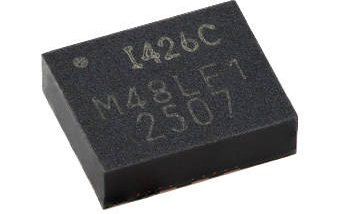
I. Basic Overview
The ICM-42607-C is a consumer-grade, high-performance 6-axis MEMS IMU inertial sensor produced by TDK InvenSense (Ying Meisheng). The single-chip integration of a 3-axis gyroscope and 3-axis accelerometer emphasizes ultra-low noise, low power consumption, and high stability. Specifically designed for battery-powered devices such as wearable electronics and TWS earbuds, it represents the mainstream solution for consumer-grade motion sensing.
Appearance and Packaging
Package: LGA-14
Dimensions: 2.5mm × 3.0mm × 0.76mm, ultra-thin micro-patch, saving PCB space.
Form: Square, flat, leadless package with 14 pads at the bottom and no exposed leads, suitable for high-density SMT mounting.
Shock resistance: Can withstand up to 20,000g of impact, resisting zero-point drift caused by vibration and PCB bending.
II. Core Electrical and Sensor Parameters
form
project
Specifications
Accelerometer
±2 / ±4 / ±8 / ±16g programmable range, 16-bit output, noise 100μg/√Hz
gyroscope
±250 / ±500 / ±1000 / ±2000 dps programmable range, 16-bit output, noise 7 mV/√Hz.
Supply voltage
VDD:1.71~3.6V;VDDIO: 1.71~3.6V, compatible with low-voltage MCUs
electric consumption
6-axis low-noise operation: 0.55 mA;Standby: 3.5μA, supports motion wake-up.
Communication interface
Three interfaces are optional: I³C (12.5 MHz), I²C (1 MHz), and SPI (24 MHz).
On-chip cache
2.25KB FIFO reduces the frequency of MCU reads, thereby lowering the main controller's load.
Built-in engine
APEX Motion Processing Engine, directly outputs motion events via hardware.
Operating temperature
-40℃ ~ +85℃
3. Built-in APEX Motion Algorithm Function (implemented in on-chip hardware, eliminating the need for MCU computation)
Pedometer, step count detection
Tilt detection, free fall detection.
Low-G detection, significant motion detection
Motion Wake-up WOM: Enters sleep mode when stationary, automatically wakes up upon detecting motion, significantly extending battery life.
Two programmable interrupt output pins, providing event-triggered notifications to the main controller.
IV. Application Scenarios
Wearable devices: smartwatches, fitness trackers, and activity bands, which monitor steps taken, posture, and sleep patterns.
Audio devices: TWS Bluetooth headphones, head posture detection, wear detection, gesture recognition, wear detection, and gesture recognition.
IoT handheld devices: handheld barcode scanners, portable remote controls
VR/AR Accessories: Simple Pose Tracking, Remote Controller
Small gimbal, drone-assisted attitude perception
V. Analysis of Strengths and Weaknesses
✅ advantage
Top-tier noise level within its class, minimal temperature drift, and excellent long-term orientation drift control.
I3C high-speed interface, balancing high-speed transmission with low power consumption, is the top choice for next-generation wearable devices.
Hardware APEX Engine, which places algorithms such as step counting and wake-up functions inside the sensors, thereby reducing the workload on the MCU.
Compact in size and impact-resistant, with well-controlled SMT reflow welding offset and high mass production yield.

Welcome to consult, let's start to cooperate!
