
News
A high-tech factory specializing in flow meters
The company's instrument science and technology park covers an area of 100,000 square meters

The company's instrument science and technology park covers an area of 100,000 square meters
CGA1A1X7S1E104K030BCTDK Automotive‑Grade Multilayer Chip Ceramic Capacitor (MLCC)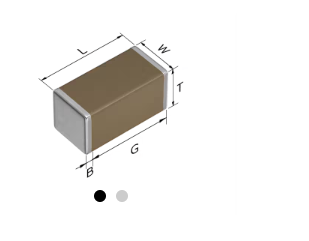
Key Parameters (Part Number Decoding)
Series: CGA = Automotive‑Grade (AEC‑Q200), Low‑ESL, Soft‑Termination Electrode
Size: 1 = 0603 (0201), 0.6×0.3×0.3 mm
Thickness: A = 0.3 mm
Dielectric: X7S = Temperature characteristic ±22% (−55 ℃ ~ +125 ℃)
Rated Voltage: 1E = 25 V DC
Capacitance: 104 = 100 nF (0.1 μF)
Tolerance: K = ±10%
Termination: BC = Soft‑termination (Thermal‑shock resistant, bend‑crack resistant)
II. Core Functions
Power supply decoupling / filtering: Suppress power‑supply noise, stabilize voltage, reduce ESR/ESL, deliver excellent high‑frequency noise reduction performance.
EMC countermeasure: Broad‑band noise suppression, mitigate EMI interference and improve system anti‑interference capability.
Smoothing / voltage stabilization: Smooth voltage in power circuits of automotive ECUs, BMS and other modules to reduce ripple.
Coupling / DC blocking: Block DC and pass AC in signal paths to protect post‑stage circuits.
III. Application Scope
✅ Automotive Electronics (Primary Application)
Powertrain domain: Engine ECU, BMS, OBC, DC‑DC
Chassis / Safety: ABS, ESP, ADAS, autonomous‑drive domain controller
Body / Cockpit: Instrument cluster, infotainment head‑unit, BCM, automotive lighting, car navigation, T‑Box
✅ Industrial & High‑end Consumer
Industrial control: PLC, servo drives, sensors, industrial power supplies
High‑end equipment: Medical instruments, communication base stations, security systems, smart home control boards
High‑reliability scenarios: Equipment requiring vibration resistance, wide temperature range (−55 ℃ ~ +125 ℃) and resistance to stress‑induced cracking
IV. Key Advantages
Automotive qualification: AEC‑Q200 compliant, meeting automotive reliability requirements
Low ESL / Low ESR: Reverse‑geometry construction with low impedance for high decoupling efficiency
Soft‑termination electrode: Resin layer absorbs stress, resists PCB bending and thermal‑shock cracking
Temperature stability: X7S dielectric, capacitance variation ≤±22% over −55 ℃ ~ +125 ℃
Welcome to consult, let's start to cooperate!
